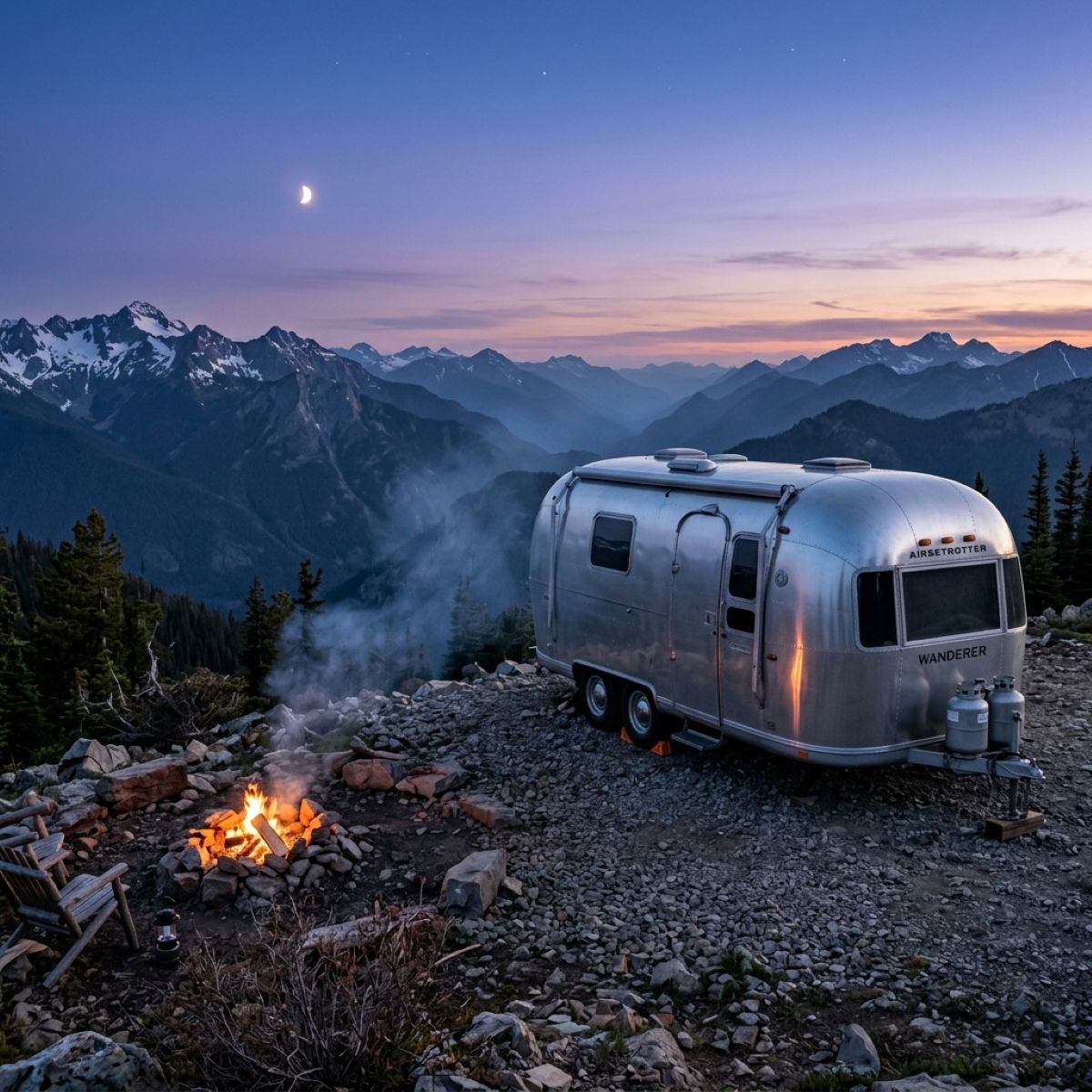
Start with legality, not scenery
Even a perfect-looking turnout is the wrong choice if overnight camping is restricted. Check the managing agency, seasonal closures, fire restrictions, and dispersed-camping rules before you go. Public land often allows dispersed camping only outside developed recreation areas, and some forests or districts apply local restrictions that are tighter than the broad rule of thumb.
If the land manager publishes maps or a motor-vehicle use map, use them. That is the fastest way to separate “looks possible on a satellite view” from “actually open to my type of vehicle.”
Evaluate the road before you drive the whole rig in
- Look for narrow brush, low branches, soft shoulders, deep ruts, and washouts.
- Ask whether your longest and lowest points can clear dips, crowns, or drainage crossings.
- If the road tightens ahead, make sure you still have space to turn around.
- When unsure, stop and walk the last section before committing the rig.
One of the biggest spot-selection mistakes is confusing “passable in a truck” with “comfortable for a trailer, van, or larger motorhome.”
Read the campsite itself before leveling
Once you reach the site, look at slope, drainage, and evidence of prior use. Existing disturbed sites are usually the lower-impact choice. Check whether rain would send water toward the rig, whether your door or patio side faces a drop-off, and whether your stabilizers or jacks would land on solid ground.
- Look up for widowmakers, weak branches, or loose deadwood.
- Look down for ant hills, mud pockets, thorny plants, or rocks that complicate leveling.
- Look around for room to deploy steps, slides, and awnings safely.
Think about sun, wind, privacy, and exits
The spot that looks best at noon can feel different at 4 p.m. or overnight. Sun exposure affects heat gain and solar harvest. Wind exposure changes comfort and noise. Proximity to another camp affects privacy and generator courtesy. Most of all, ask how easily you could leave if weather shifts or if someone else needs the road.
Many experienced RVers prefer a slightly less scenic site with better wind cover, flatter parking, and simpler exit geometry.
Use a practical arrival-and-departure plan
- Top off fuel before you turn onto remote roads.
- Save offline maps and a photo of the route junctions.
- Have a daylight turnaround target rather than endlessly pushing deeper.
- If you are towing, think about how backing and unhooking would work before you stop.
The best site is one that still feels good when you imagine leaving it in rain, dark, or a hurry.